Milky Way, Meteors, and Wildfire Ignition: Capturing the Start of the Blue Lake Fire
The wild part of life is its unpredictability. So much of our experiences can be attributed to chance…. being in a certain place at a certain time when a certain thing happens.
During our photo exploration of the North Cascades, we hung around at Washington Pass after sunset, waiting for the skies to darken and the stars to shine through. It took about 2 hours for the long light of summer to fade enough for us to start photographing the night sky. And what happened next took less than 30 minutes.
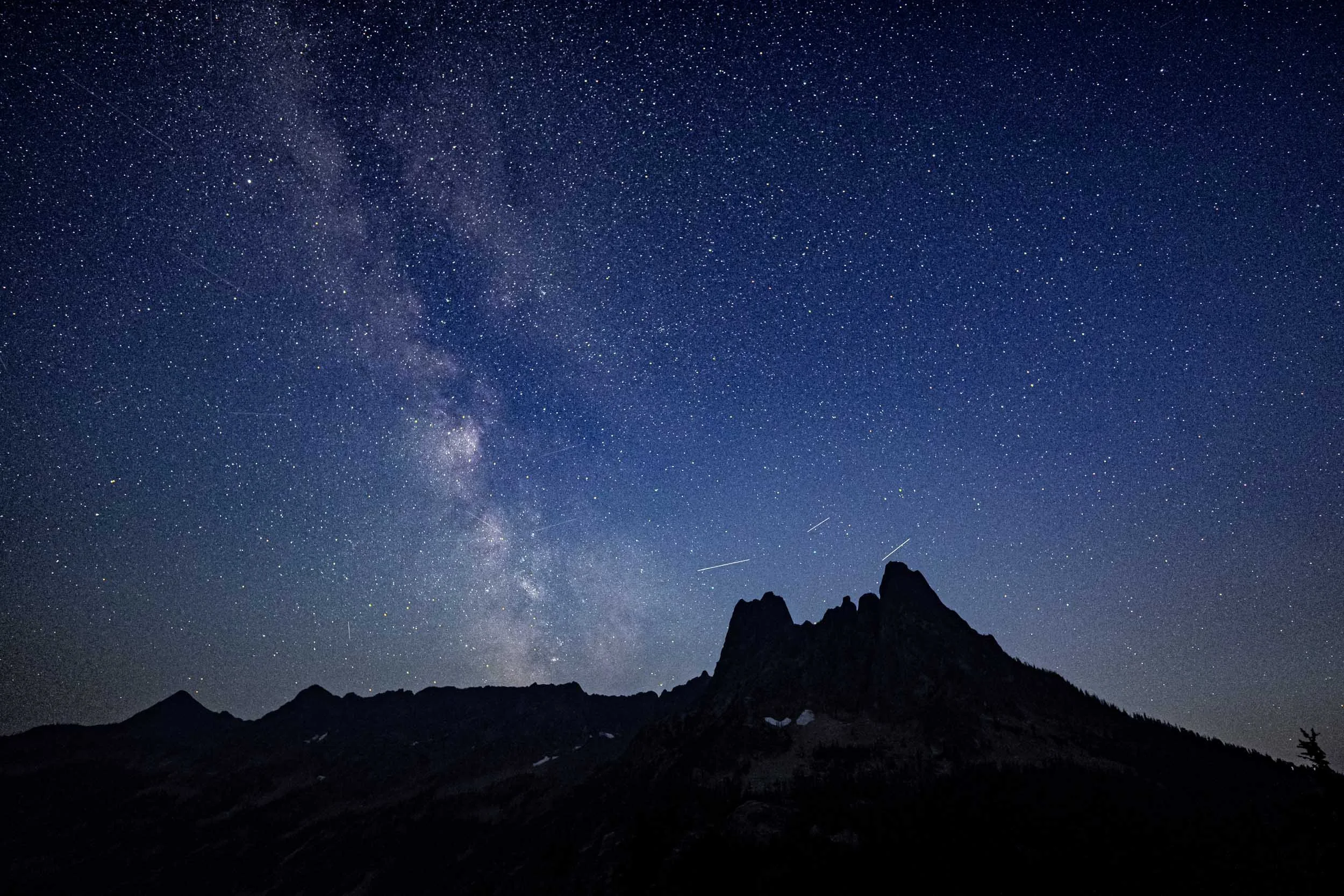
Milky Way over Liberty Bell, 8:49 pm. Blue hour lingered as meteors and the Milky Way begin to appear.
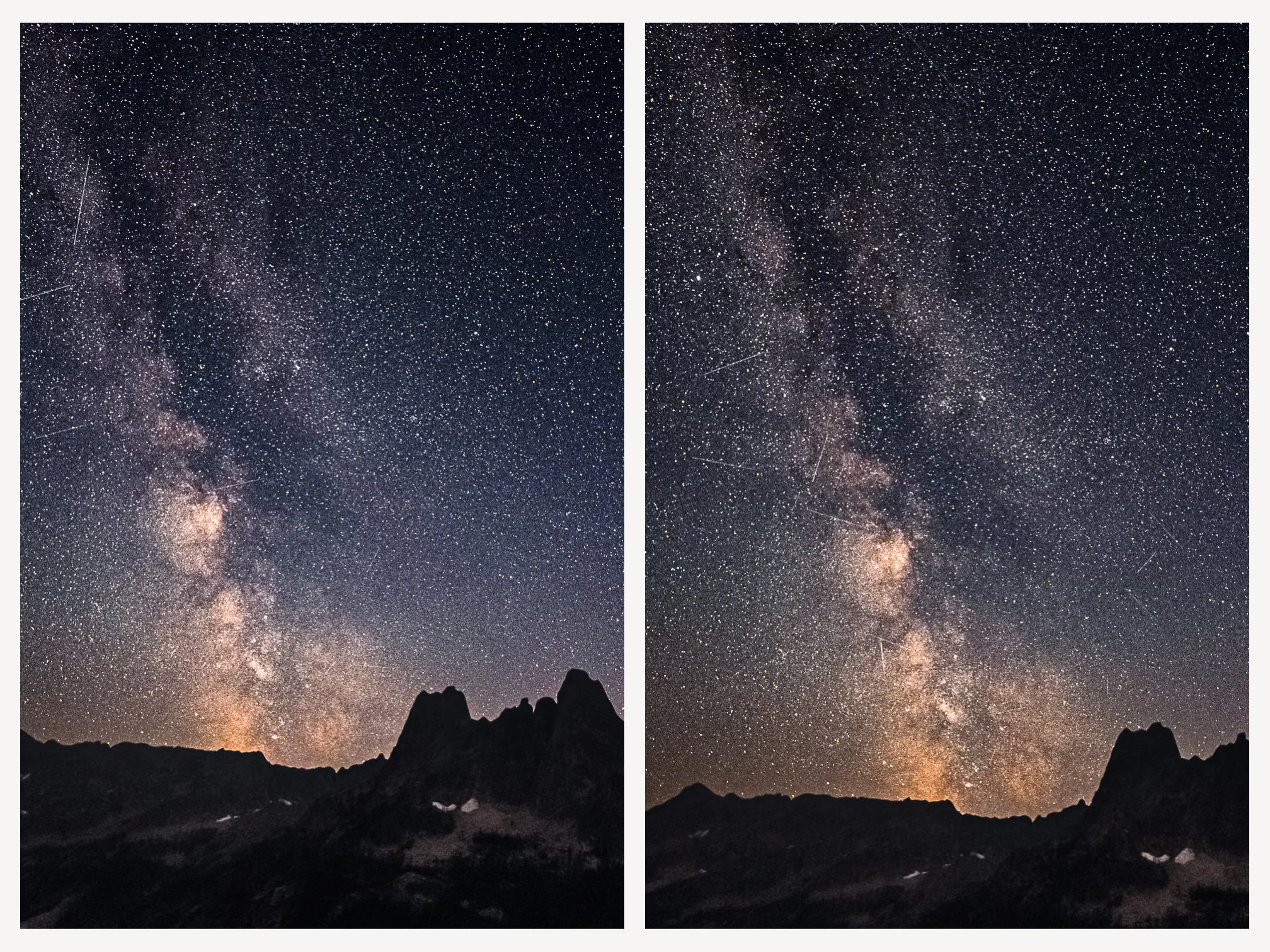
Milky Way over Liberty Bell, 9:04 pm. The sky slowly deepening to the black of night, allowing the Milky Way gasses to really shine.
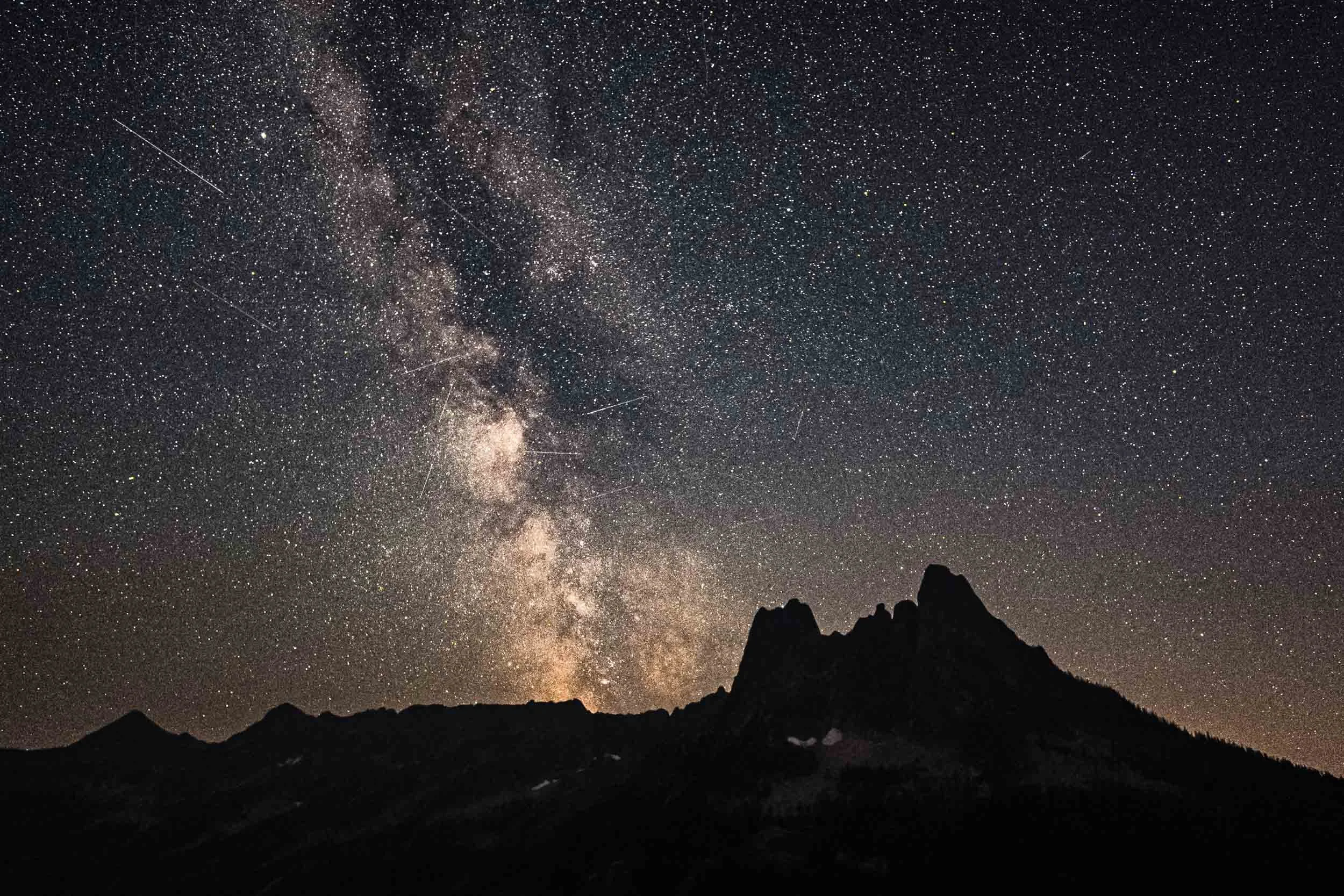
Milky Way over Liberty Bell, 9:07 pm. The Perseid meteor shower had peaked the day before, but was still incredibly active.
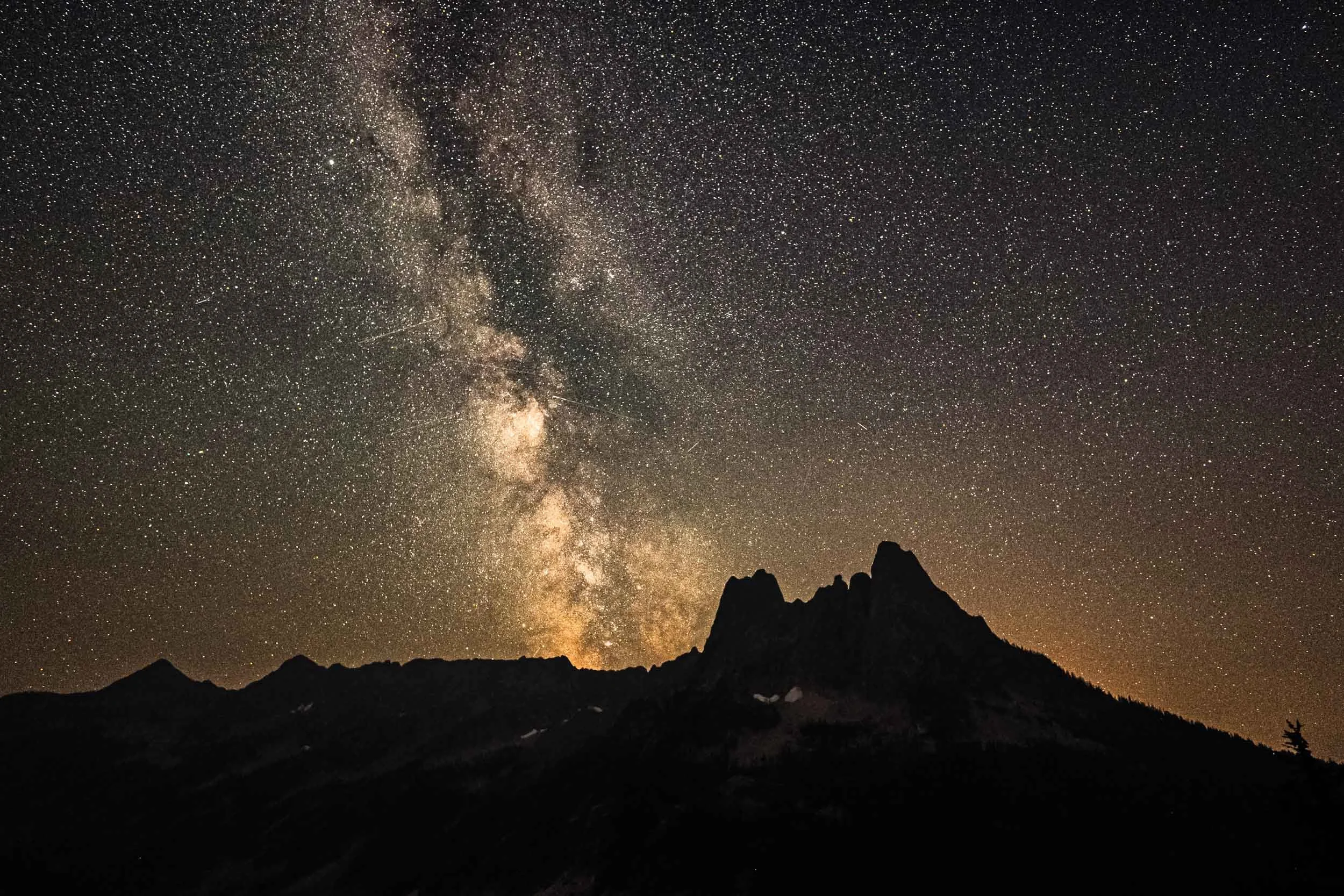
Milky Way over Liberty Bell, 9:14 pm. The first hint that something was changing as the darkness of the sky took on a more golden hue.
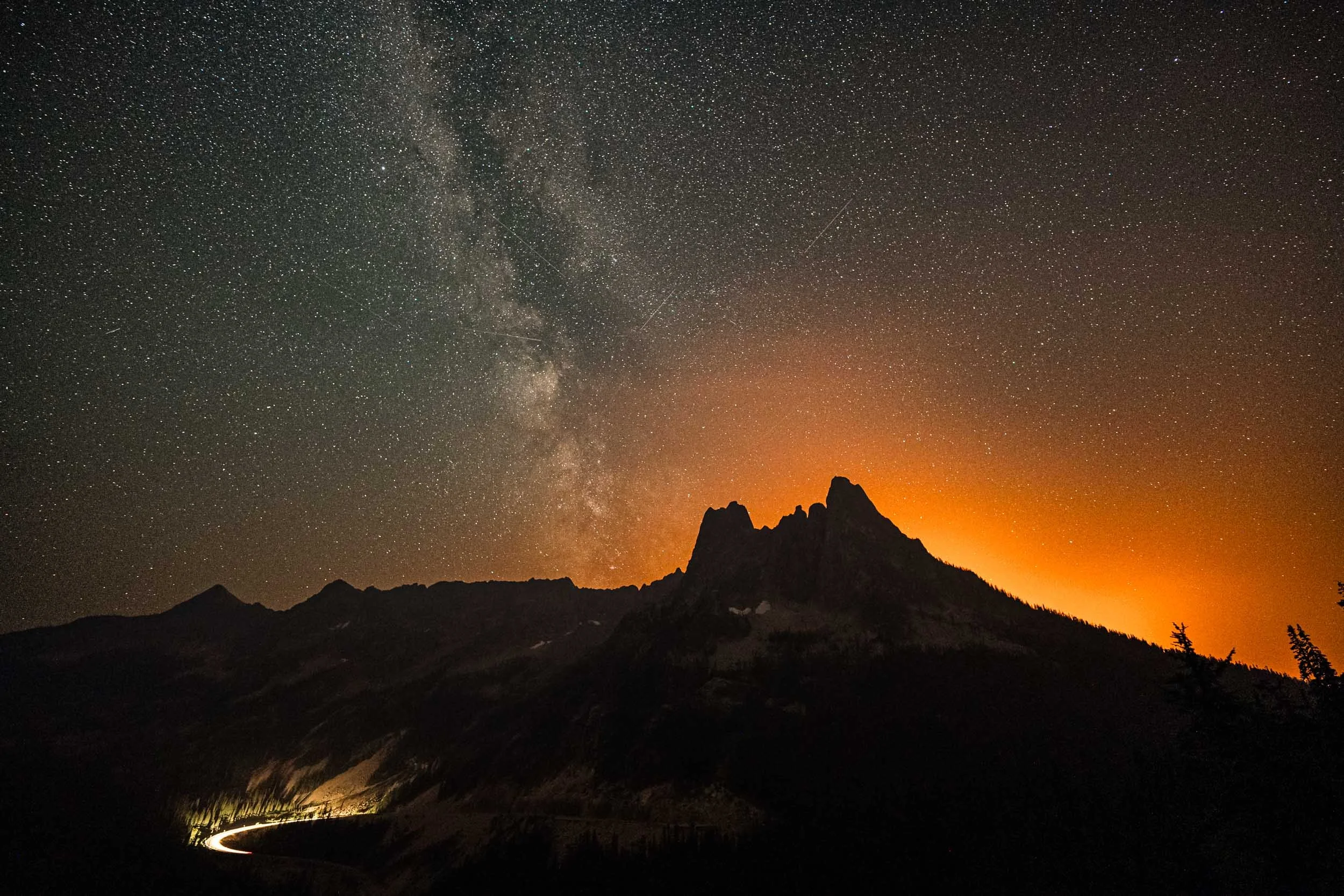
Milky Way over Liberty Bell, 9:17 pm. The sky erupted in orange and our subject shifted from the night sky to what we later learned was the start of the Blue Lake Fire.
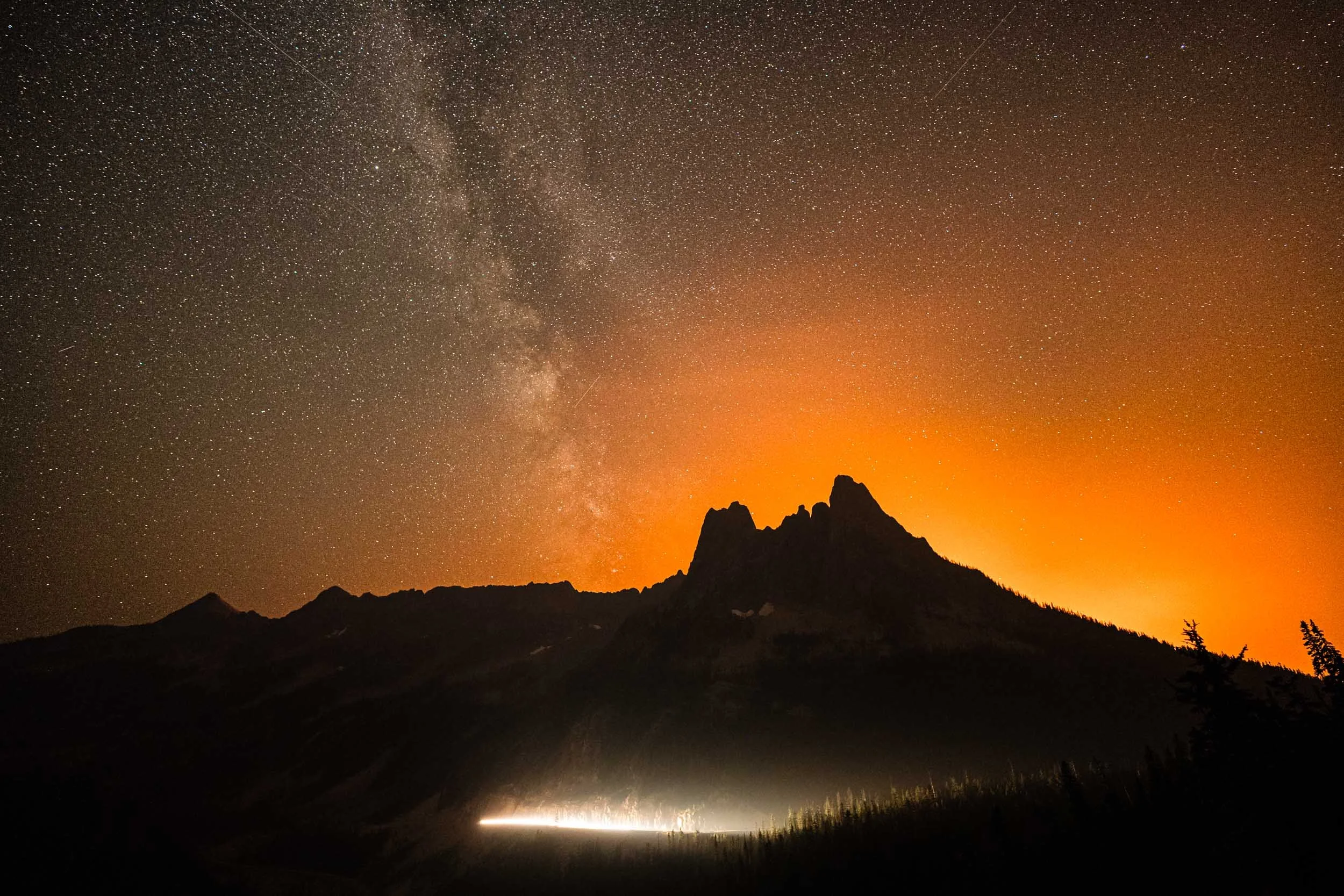
Milky Way over Liberty Bell, 9:18 pm.
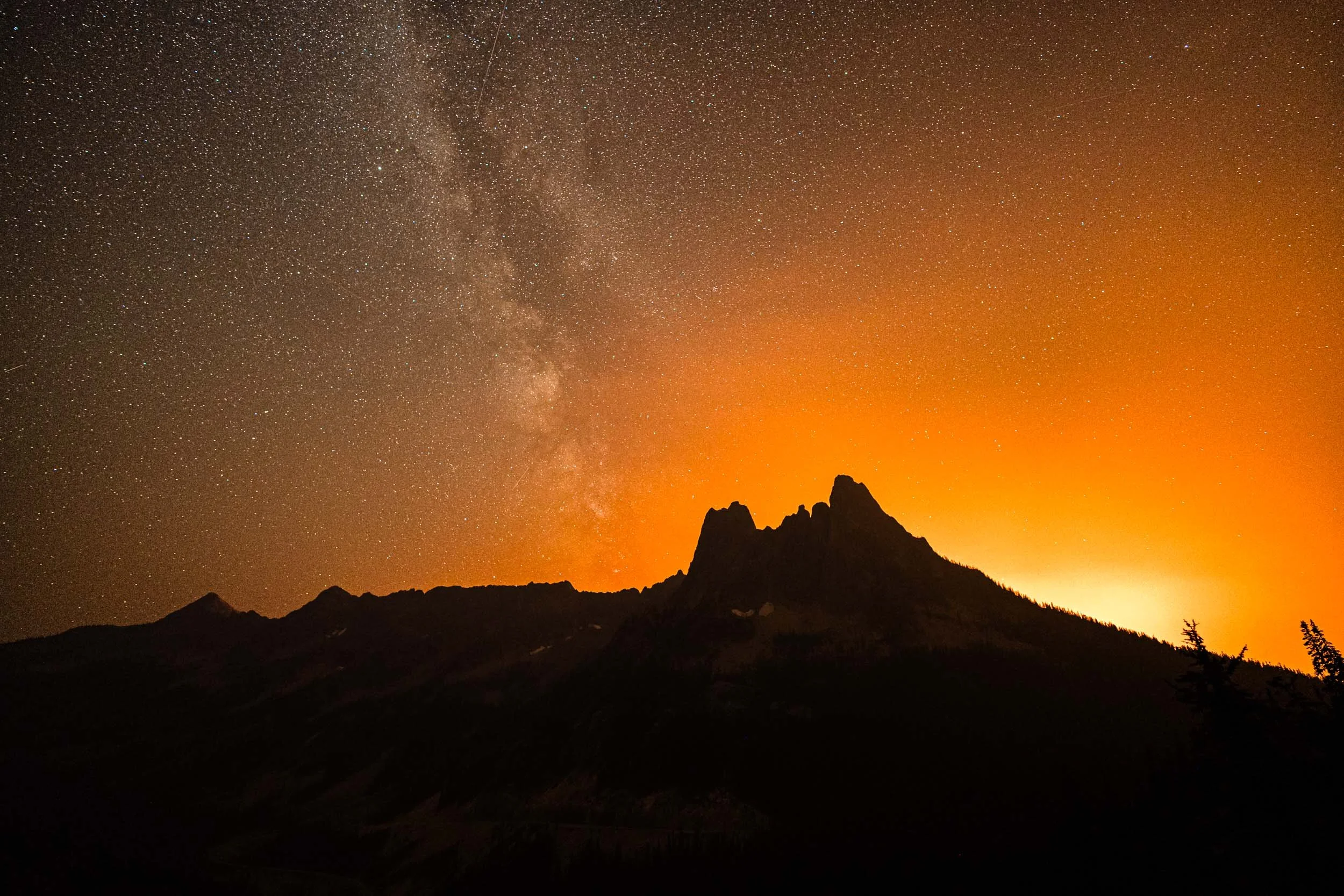
Milky Way over Liberty Bell, 9:19 pm.
The Blue Lake Fire was centered roughly one mile west of the Washington Pass Overlook, where I took these photographs. It was first reported on August 14th, 2023 and over 119 days, it burned over 1000 acres of North Cascades National Park. While I could find no official cause, the fire was thought to be a holdover from previous lightning strikes in the area.